
Yes, accessory dwelling units are legal in Texas, but no single state law makes them easy to build everywhere. Your city’s zoning code and your property’s deed restrictions decide what actually happens on your lot, not just a blanket state statute.
The clearest statewide signal is Senate Bill 673, which pushes cities toward ministerial (staff-level, not board-voted) permit approval and a 60-day deemed-approved clock for complete applications. That’s a meaningful shift away from discretionary hearings, but it doesn’t erase local size caps, setback rules, or private covenants that were recorded decades before the bill existed.
Before you spend a dollar on design, do three things: pull your deed and any homeowners association covenants, call your city’s planning department and ask specifically about accessory dwelling unit rules, and confirm whether your lot’s zoning classification allows a second structure at all.
Skipping that sequence is the single biggest reason ADU projects stall in Texas. Do it first.
- Order a title search or read your deed restrictions yourself before hiring a designer
- Call your city or county planning office and ask for their ADU-specific handout, not just general zoning rules
- Ask whether your city treats ADU permits as ministerial (staff-approved) or discretionary (requires a hearing)
Key Takeaways
Texas ADU law sets a state floor through measures like SB673’s ministerial review requirements, but city zoning codes and private deed restrictions still determine what you can actually build.
| Point | Details |
|---|---|
| No uniform state law | SB673 limits certain local restrictions and sets a 60-day ministerial review clock, but cities still control size, setbacks, and parking. |
| Check deed restrictions first | Private covenants operate independently of city permits and can block a project the city already approved. |
| City rules vary sharply | Austin allows units up to 1,100 sq ft with reduced parking rules, while Dallas and San Antonio often require owner-occupancy and parking. |
| Houston’s real barrier is private | With no zoning code, Houston’s deed restrictions carry the full weight of land-use control on most residential lots. |
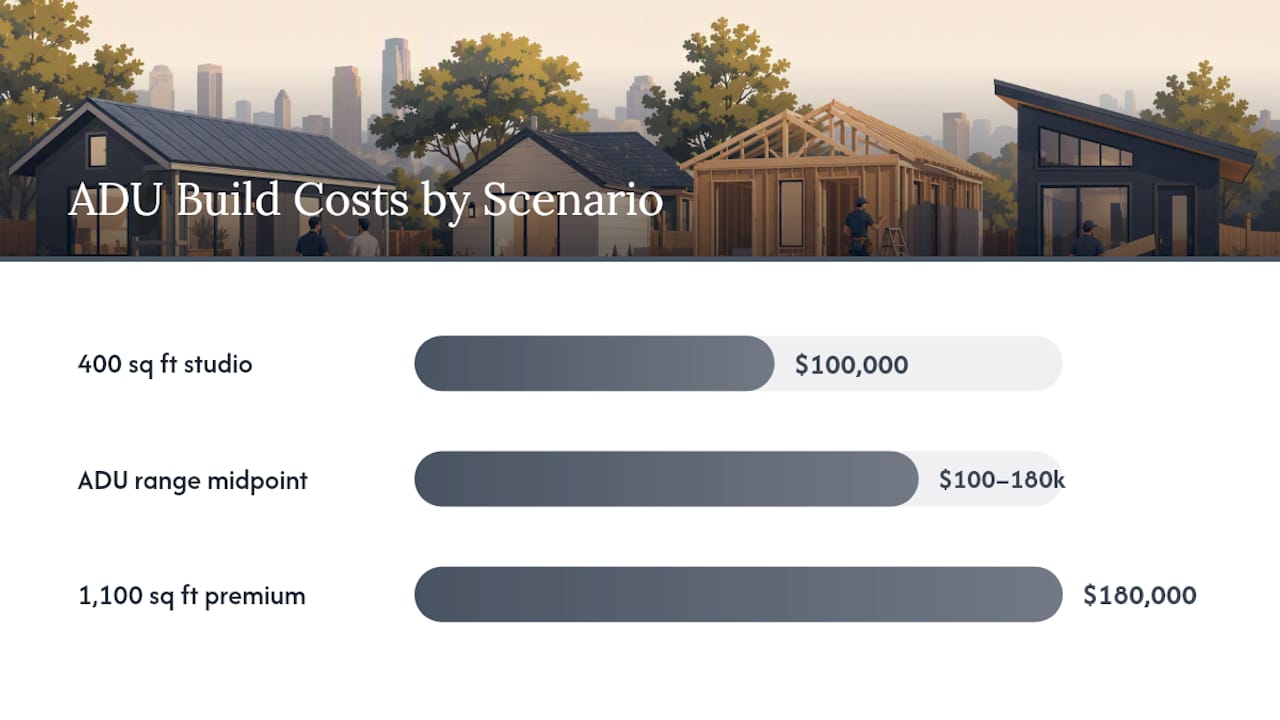
| Budget beyond construction costs | Expect $100,000 to $180,000 in build costs, plus separate impact fees, utility connection charges, and insurance and tax adjustments. |
Table of Contents
- What Texas Adu Laws Actually Say (SB673 Explained)
- Why Local Zoning Rules Still Decide Most Adu Details
- Austin, Houston, Dallas, and San Antonio: How the Rules Differ
- How Long Does an ADU Permit Take in Texas?
- Setback, Size, and Parking Rules You Need to Confirm
- Deed Restrictions and HOA Rules That Can Block Your ADU
- What Does an ADU Cost to Build in Texas?
- Your Step-by-Step Plan to Build an ADU in Texas
- How Live Large™ Helps You Navigate Permitting and Financing
- Plumbing and Electrical Code Rules for Texas ADUs
- Do You Need Special Insurance for a Texas ADU?
- Property Tax and Rental Income Tax Effects of Adding an ADU
- Utility Hookups and Impact Fees You Should Expect
- Where to Verify Texas ADU Rules Yourself
- Editorial Take: The Rulebook Isn’t Finished Yet
- Sources
What Texas Adu Laws Actually Say (SB673 Explained)
Texas doesn’t have a single, uniform accessory dwelling unit code the way some states are moving toward. What it has instead is Senate Bill 673, a legislative attempt to rein in the patchwork by adding a new chapter to the Local Government Code that defines what an ADU is and limits how far cities can go in blocking them.
The bill’s core move is definitional and procedural, not a wholesale zoning override. It formally defines an accessory dwelling unit, generally a smaller, secondary residential structure on a lot with an existing single-family home, and then lists specific restrictions that certain political subdivisions can no longer impose. That includes bans on excessive lot-size minimums that go beyond what’s required for a standalone single-family home, and limits on how far cities can push setback or owner-occupancy mandates.
The provision most homeowners will actually feel is the permitting timeline. Under the bill’s language, a permitting authority has to approve or deny a completed ADU application within 60 days, or the application is deemed approved by default.
The statute’s ministerial-review language matters because it converts what used to be a discretionary, hearing-dependent process in some jurisdictions into something closer to a checklist: submit complete plans, and the clock starts running against the city, not against you.
That 60-day window only starts once your application is genuinely complete, which is a detail worth sitting with. Cities can and do reject applications as incomplete for missing site plans, unclear elevation drawings, or absent utility documentation, and every one of those bounces resets the clock. The full bill text spells out the specific categories of local regulation that are off the table, including certain minimum lot-size thresholds and blanket owner-occupancy requirements in many circumstances, while leaving substantial room for cities to keep regulating around the edges.
Here’s what the bill does not touch:
- Building and fire codes. Structural, electrical, and plumbing safety requirements stay fully in force regardless of ADU status.
- Reasonable design standards. Cities can still require exterior materials or roof pitch consistency within limits that don’t functionally ban ADUs outright.
- Private deed restrictions and HOA covenants. State law regulates what governments can require. It has no power over what your neighborhood’s private covenant says.
- Legitimate safety-based setbacks. Fire access and utility easement setbacks tied to genuine safety concerns generally survive.
Coverage of the bill since its filing has been consistent on one point: this is a state trying to nudge cities toward consistency, not a finished, uniform ADU code. Industry observers tracking SB673’s progress describe Texas ADU law as still in flux, with the bill’s practical effect depending heavily on how individual cities choose to interpret and implement it. If you’re reading this expecting a single number, one permit fee, one size cap, that applies from El Paso to Beaumont, that number doesn’t exist yet. What you get instead is a state floor, and a city ceiling that varies enormously.
Why Local Zoning Rules Still Decide Most Adu Details
State law sets outer boundaries. City and county rules fill in almost everything else, and the two operate on entirely different tracks that homeowners frequently confuse.
Zoning controls where and whether you can build: which lots allow a second dwelling, how big it can be relative to the primary house, how far it has to sit from your property line, and whether you need to live on-site yourself. Building code controls how you build it safely: wiring, framing, plumbing, fire separation. A project can be fully zoning-compliant and still fail inspection over code details, or the reverse.
Before you sketch a single floor plan, run through these local variables with your planning department:
- Zoning district and use classification. Confirm your lot’s base zoning actually permits an accessory dwelling unit as a use, not just as a structure.
- Setback and lot coverage math. Ask for the specific side, rear, and front setback numbers for your zone, plus any maximum lot coverage percentage.
- Owner-occupancy requirements. Some cities require the primary home or the ADU to be owner-occupied; this single rule kills a lot of pure-rental investment plans.
- Parking minimums. Confirm whether an additional off-street parking space is still required for the ADU.
- Short-term rental restrictions. Ask separately whether ADU use for platforms like Airbnb requires its own license, since this is regulated apart from the building permit.
Pro Tip: Ask your planning department for their ADU rules in writing, not just verbally. Verbal answers from a front-desk staffer are not binding, and you want a paper trail if a reviewer later disagrees with what you were told.
Houston is the case that breaks people’s assumptions. The city has no zoning code at all, which means there’s no municipal use restriction blocking an ADU on most residential lots. That sounds like a green light, and for public regulation, it largely is. But Houston homeowners routinely discover that their subdivision’s private deed restrictions, recorded when the neighborhood was platted, prohibit secondary structures entirely, or cap them tightly. Steadily’s regional ADU guide flags this as the defining feature of building in Houston: the absence of zoning shifts almost the entire regulatory burden onto private covenants that the city has no role in enforcing or waiving.
Austin, Houston, Dallas, and San Antonio: How the Rules Differ
Texas ADU rules aren’t uniform across its biggest metros, and the differences are large enough to change whether a project makes financial sense.
Austin has moved furthest toward ADU-friendly policy. The city allows units up to 1,100 square feet in many residential zones, a generous ceiling compared to most Texas cities, and Austin Development Services has removed off-street parking requirements for ADUs in many districts. Recent reforms also eliminated owner-occupancy mandates in several zoning categories, which matters enormously for investors who want to hold an ADU as a pure rental without living next door. That said, Austin still separately regulates short-term rentals: using the unit as an Airbnb-style listing typically requires its own license category apart from the building permit itself.
Houston looks permissive on paper because there’s no zoning code to navigate. The real gatekeeper is private, not public. Deed restrictions and CC&Rs recorded at the subdivision level frequently prohibit or tightly limit accessory structures, and the city has no authority to override a private covenant. Before assuming Houston is the easy option, pull your subdivision’s deed restrictions. That single document matters more than any city ordinance will.
Dallas runs closer to the statewide norm, with typical detached ADU size caps in the 1,000 to 1,200 square foot range and owner-occupancy requirements that show up frequently in single-family zoning districts. Parking and setback rules follow fairly standard single-family patterns, meaning you should expect side and rear setback requirements similar to what governs a garage or workshop addition.
San Antonio tends to apply lot-size triggers, meaning your minimum lot size may determine whether an ADU is allowed at all, alongside standard setback requirements and owner-occupancy rules in many residential zones. PERCH’s state ADU index notes these size and occupancy patterns as fairly consistent features of San Antonio’s approach compared to Austin’s more permissive stance.
| City | Typical size cap | Owner-occupancy | Parking requirement | Biggest local hurdle |
|---|---|---|---|---|
| Austin | Up to 1,100 sq ft | Removed in many zones | Removed in many zones | Short-term rental licensing |
| Houston | Varies by deed restriction | Not city-regulated | Not city-regulated | Private covenants, not zoning |
| Dallas | ~1,000–1,200 sq ft | Often required | Often required | Standard setback compliance |
| San Antonio | Lot-size dependent | Often required | Typically required | Minimum lot-size thresholds |
None of these numbers are guaranteed to hold next year. Cities revise ADU ordinances more often than most homeowners expect, particularly as SB673’s effects work through local code updates. Treat this table as a starting point for your call to the planning department, not a substitute for it.
If you’re weighing an ADU specifically as a short-term rental in one of these markets, the licensing layer on top of the building permit deserves its own research pass, since Austin, for instance, separates the two entirely.
How Long Does an ADU Permit Take in Texas?
The permit lifecycle for a Texas ADU generally moves through the same stages regardless of city, but the timeline and the friction points differ sharply based on whether your jurisdiction treats the application as ministerial or discretionary.
- Pre-submittal consultation. Meet with planning staff to confirm zoning eligibility, size caps, and required documents before you pay a designer for full plans.
- Site plan and design submission. Submit a survey-based site plan, floor plans, elevations, and often a utility connection plan.
- Completeness review. Staff checks the application for missing items; an incomplete submission does not start the 60-day clock under SB673-style ministerial rules.
- Plan review. Building, fire, and zoning reviewers check the design against code; this is where most revision requests originate.
- Permit issuance. Once approved, you receive the building permit and can begin construction.
- Inspections. Expect staged inspections: foundation, framing, rough plumbing and electrical, and a final inspection.
- Certificate of Occupancy. The CO is issued after final inspection passes, and it’s the document that legally allows anyone to live in the unit.
Where SB673’s ministerial approval language applies, a completed application should get a yes-or-no answer, or default approval, within 60 days. That’s a real improvement over cities that historically routed ADU approvals through a planning commission hearing with no fixed deadline at all.
One overlooked detail derails more projects than bad design work: securing a unique address or unit number for the new structure. Utility companies and emergency dispatch systems both require a distinct address to connect service and respond to calls, and homeowners frequently forget to request this during the permitting process. Skipping this step can leave your ADU built, inspected, and still unable to get a final Certificate of Occupancy because utilities can’t be connected to an address that doesn’t formally exist yet.
Build in extra time for this address assignment step specifically. It’s paperwork, not construction, but it stalls projects at the finish line more often than any inspection failure does.
Setback, Size, and Parking Rules You Need to Confirm
Dimensional rules are where “Texas allows ADUs” turns into “your specific lot allows this specific ADU,” and the gap between those two statements is where most planning goes wrong.
- Size caps vary by formula, not just by number. Some cities set a flat square-footage ceiling; others calculate the maximum as a percentage of the primary home’s floor area. Austin’s 1,100 square foot allowance in many zones is generous by state standards; other cities land closer to 1,000 to 1,200 square feet as a flat cap.
- Setbacks commonly run around 5 feet on side and rear yards, though this varies by zoning district and lot configuration. SB673’s language limits how far cities can push setback requirements beyond what applies to a standard accessory structure, but it doesn’t zero them out.
- Height and story limits typically cap ADUs at one or two stories, often with a maximum height measured in feet from grade rather than a flat story count, to preserve neighboring sightlines and privacy.
- Lot coverage percentages determine how much of your total lot area can be covered by structures combined, meaning a large primary home can eat into your ADU size allowance even under a generous square-footage cap.
- Parking requirements are the most inconsistent variable on this list. Austin has removed off-street parking mandates for ADUs in many districts, while Dallas and San Antonio more commonly still require an additional space.
None of these numbers should be treated as statewide constants. Confirm every one of them against your specific zoning district before finalizing a design, because the cost of redesigning after a rejected plan review is almost always higher than the cost of one extra phone call to planning staff up front.
Deed Restrictions and HOA Rules That Can Block Your ADU
Private covenants operate on a completely separate legal track from city permitting, and that separation is exactly why so many Texas ADU projects fail after the city has already said yes.
A deed restriction or HOA covenant is a private agreement recorded against your property, typically decades ago when the subdivision was platted. City planning departments have no authority to waive it and generally won’t even check it during permit review. You can hold a fully approved building permit and still be in violation of a private covenant that prohibits secondary structures, and your HOA (or even a single neighbor with standing) can sue to enforce it.
- Pull your deed and any recorded restrictions before you design anything. Your county clerk’s office or a title company can produce this quickly, often for a modest research fee.
- Read the HOA’s covenants, conditions, and restrictions (CC&Rs) in full, not just the summary sheet, since ADU-relevant language is often buried under “accessory structure” or “outbuilding” definitions.
- If a restriction exists, evaluate your realistic options: petitioning for a covenant amendment (which typically requires a supermajority vote of the HOA membership), or a legal challenge to the covenant’s enforceability, which courts grant far less often than homeowners hope.
Pro Tip: Loop in a title company and a real estate attorney before you sign a construction contract, not after. Discovering a blocking covenant mid-build costs far more than discovering it during a title search that takes a few days.
This diligence step matters most in Houston, where the absence of zoning means deed restrictions carry the entire weight of local land-use regulation. It matters everywhere else too, just with slightly lower stakes.
What Does an ADU Cost to Build in Texas?
Texas construction costs for a well-built ADU generally fall in the $100,000 to $180,000 range, depending heavily on square footage, finish level, and site work like grading, utility trenching, or foundation type. A compact 400 square foot studio on an easy, flat lot lands near the bottom of that range; a 1,100 square foot two-bedroom unit with premium finishes and a difficult utility tie-in pushes toward the top.
Financing generally splits into three paths. A home equity line of credit (HELOC) is the most common route for homeowners, since it borrows against equity already built up in the primary residence and typically carries a lower rate than an unsecured construction loan. Construction-to-permanent loans work for buyers without enough existing equity, converting into a standard mortgage once the ADU is complete. Investor capital or portfolio financing tends to fit real estate investors building multiple units across several properties rather than a single backyard structure. Live Large™ works directly with homeowners on HELOC-based financing assistance and helps investors structure capital across multi-unit projects, which removes one of the biggest early bottlenecks in the process.
Rental income potential varies by metro, but ADUs in Austin, Dallas, and San Antonio’s stronger rental submarkets often justify the investment within a reasonable payback window when construction costs stay controlled and the unit leases quickly.
- Soft costs add up fast: permit fees, impact fees tied to utility capacity, water and sewer tap fees, and design or architectural fees typically add several thousand dollars beyond the core construction number.
- Utility upgrades for panel capacity or a second water line can be a meaningful line item on older properties, and it’s worth pricing before you commit to a floor plan.
If you’re modeling an ADU purely as a rental play, a rental-focused ADU guide walks through the income-side math in more depth than cost alone can capture.
Your Step-by-Step Plan to Build an ADU in Texas
Once you’ve decided an ADU makes sense for your property, the sequence you follow matters as much as any individual decision inside it.
- Research your zoning district’s ADU allowances and pull your deed restrictions or HOA covenants before spending money on design.
- Contact your local planning department for a pre-submittal consultation and get their answers in writing.
- Confirm utility capacity, particularly whether your existing water, sewer, and electrical service can support a second unit without major upgrades.
- Hire a designer or design-build firm familiar with your specific city’s ADU submission requirements.
- Submit complete plans, including site plan, elevations, and utility connection details, to start the ministerial review clock.
- Respond quickly to any revision requests; a slow response resets momentum even when it doesn’t legally reset the clock.
- Schedule inspections in sequence: foundation, framing, rough mechanical, and final.
- Request your unique address or unit number assignment early, not after inspections pass.
- Finalize your Certificate of Occupancy before allowing anyone to move in.
At the pre-submittal meeting, ask planning staff directly: How does the city classify this ADU (detached, attached, or garage conversion)? Is owner-occupancy required? What’s the parking requirement? What’s the maximum allowable size for my zoning district? Are there impact fees beyond the standard permit fee? What’s the realistic review timeline for a complete application?
Pro Tip: If you discover a blocking deed restriction or unexpected neighborhood opposition partway through planning, pause before redesigning. A quick consultation with a real estate attorney often reveals whether the restriction is enforceable at all before you spend money working around it.
Comparing an ADU against a traditional home addition is worth doing before you commit to either path, since the permitting and cost tradeoffs differ meaningfully between the two approaches.
How Live Large™ Helps You Navigate Permitting and Financing
Working through Texas ADU rules, city by city, is exactly the kind of project where having someone who does this daily changes the outcome. Live Large™ handles design, permitting, financing assistance, construction, and turnkey installation for accessory dwelling units and small footprint modern homes, which means the deed-restriction research, the zoning confirmation calls, and the address-assignment paperwork are handled as part of the process rather than left to a homeowner juggling a full-time job.
Local reforms move fast and unevenly. Municipal ADU policy in fast-growing Texas metros has shifted meaningfully in just the past couple of years, and staying current on what a given city allows this quarter versus what it allowed last year is a full-time job in itself.
Live Large™ has tracked similar policy shifts closely in other fast-growing markets, including coverage of how Pasco County approved accessory dwelling units and how Tampa reformed its ADU policy, the kind of local-code tracking that Texas homeowners now need city by city as SB673’s effects play out.
- Full design-build service from initial feasibility check through final Certificate of Occupancy
- Financing assistance structured around HELOC options for homeowners and capital structuring for investors
- Turnkey installation that folds permitting steps into the construction timeline rather than treating them as separate hurdles
If you’re deciding whether to build, Live Large™’s turnkey development model is worth a look before you start collecting bids piecemeal.
Plumbing and Electrical Code Rules for Texas ADUs
Accessory dwelling units in Texas fall under the same state-referenced plumbing and electrical codes that govern any residential structure, typically versions of the International Plumbing Code and National Electrical Code as adopted and sometimes modified by individual cities. This is one area where SB673’s local-restriction limits don’t apply at all: safety code compliance sits outside the categories of regulation the bill restricts.
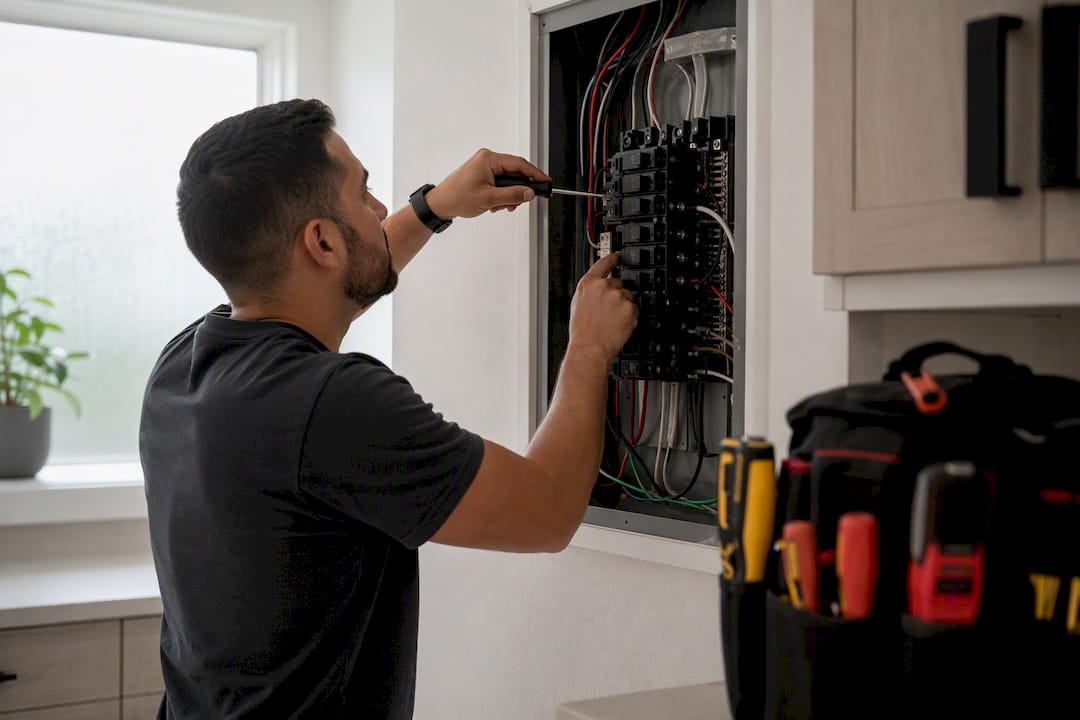
Practically, this means your ADU needs its own properly sized electrical panel or a sub-panel fed from the main service, sized to the unit’s actual load, not just its square footage. A full kitchen and separate water heater in the ADU typically requires more electrical capacity than a simple studio conversion, and older properties sometimes need a full service upgrade to support both structures.
Plumbing works similarly. A detached ADU generally needs its own sewer lateral connection or a properly sized tie-in to the existing line, along with water supply capacity that doesn’t starve the primary home during peak use. Cities inspect these systems independently of your zoning approval, and a plan that clears zoning review can still get rejected at plan review stage over inadequate electrical service size or an undersized sewer tie-in.
Budget for a licensed electrician and plumber’s assessment early in design, before finalizing floor plans, since discovering a capacity shortfall after submitting plans means a costly redesign rather than a simple adjustment.
Do You Need Special Insurance for a Texas ADU?
Adding an ADU changes your risk profile, and most standard homeowner’s insurance policies don’t automatically extend full coverage to a new secondary structure without a policy update. Contact your insurer before construction begins, not after, since building an unlisted structure can create a coverage gap if damage occurs before the policy is amended.
Insurers typically want to know whether the ADU will be owner-occupied, used as a long-term rental, or listed as a short-term rental, because each use case carries different liability exposure. A long-term tenant in your backyard unit generally requires adding landlord liability coverage or converting to a dwelling-fire policy specific to that structure, since standard homeowner’s policies are built around owner-occupied use. Short-term rental use often requires a distinct commercial or hosting-specific endorsement, since most standard policies explicitly exclude short-term rental activity.
Your premium will likely increase once the ADU is added to your policy, reflecting both the added structure’s replacement value and the liability exposure of having a tenant on the property. That increase is generally modest compared to the added rental income an ADU produces, but it’s a real recurring cost that belongs in your financial modeling, not a surprise you discover at renewal.
If you’re financing the ADU through a HELOC or construction loan, your lender will likely require proof of adequate coverage before closing, so factor this conversation into your financing timeline rather than treating it as a post-construction afterthought.
Property Tax and Rental Income Tax Effects of Adding an ADU
Building an ADU adds assessable value to your property, and most Texas county appraisal districts will reassess your property’s value once the new structure is complete and reflected in permit records. That means a higher taxable value and a corresponding increase in your annual property tax bill, generally proportional to the ADU’s construction cost and square footage rather than the full market value it might command as a standalone unit.
Texas has no state income tax, which simplifies one side of the equation considerably compared to states like California. But rental income from an ADU is still fully subject to federal income tax, and it needs to be reported regardless of whether the tenant is a stranger or a family member paying below-market rent.
On the benefit side, many of the ADU’s construction and operating costs become deductible against that rental income at the federal level: depreciation on the structure, a portion of utilities if you’re covering them, maintenance costs, and mortgage or HELOC interest tied to the ADU’s financing. Homeowners using the unit purely for a family member rent-free typically can’t claim these deductions the same way, since the tax code treats non-rental personal use differently from income-producing use.
Talk to a tax professional before construction, since the way you structure occupancy (rental versus family use, long-term versus short-term) changes both your deduction eligibility and your reporting obligations from day one.
Utility Hookups and Impact Fees You Should Expect
Connecting a Texas ADU to water, sewer, and electrical service almost always costs more than homeowners initially budget, and the fees involved vary significantly by city and even by utility provider within the same metro.
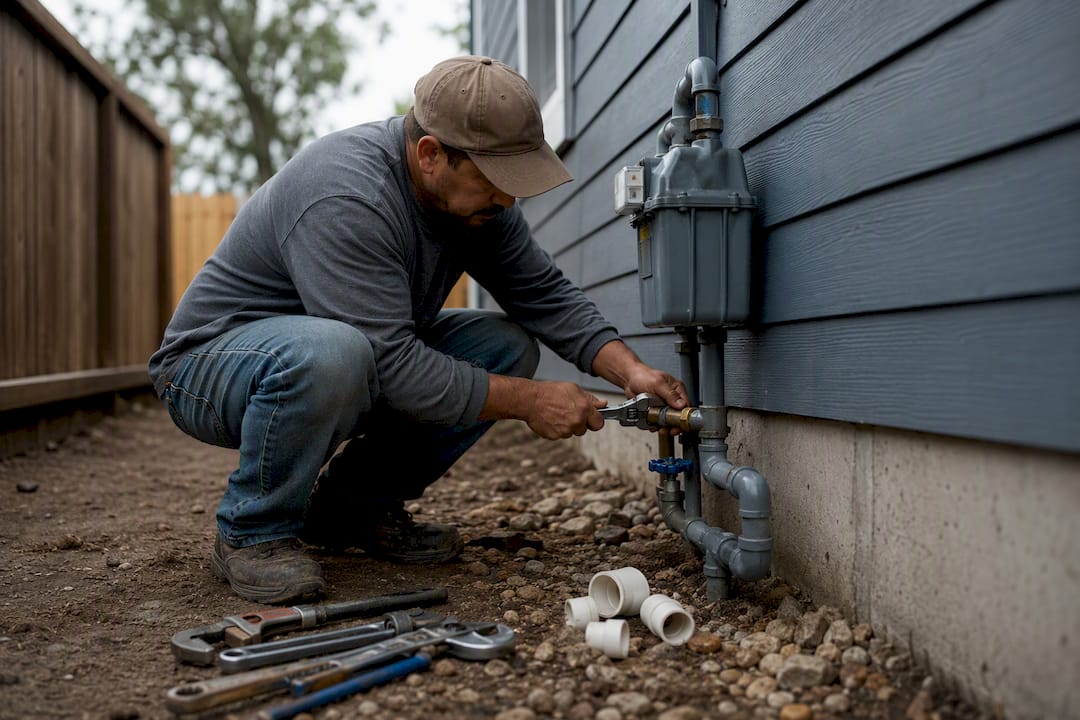
Most cities charge impact fees tied to the additional capacity a new dwelling unit places on water and sewer systems, calculated separately from your building permit fee. These fees can run from a few hundred dollars in smaller municipalities to several thousand in fast-growing metros where utility infrastructure is already strained. Some cities also charge separate tap fees for physically connecting to the water main or sewer line, distinct from the impact fee itself.
Electrical utility providers, meanwhile, often charge a service connection fee if your ADU requires a new meter rather than sharing the primary home’s service, and this fee typically scales with the amperage of new service required.
The address and unit-numbering step covered earlier in the permit process directly affects this stage: utilities generally won’t finalize a connection to a structure that lacks a distinct, assigned address, since their systems and emergency dispatch databases are built around unique addresses rather than parcel numbers alone.
Budget for utility connection costs as a distinct line item separate from construction, not folded into your general contingency fund, since these fees are billed by the utility provider directly and aren’t always included in a contractor’s initial estimate.
Where to Verify Texas ADU Rules Yourself
Every claim in this guide traces back to sources you can check directly, and you should, since local rules shift faster than any single article can track.
- SB00673 bill text on the Texas Legislature’s own site is the authoritative source for exactly what the state does and doesn’t restrict.
- Austin Development Services’ ADU page gives current size caps, parking rules, and owner-occupancy status directly from the city that regulates them.
- Your own city or county’s permit portal answers the one question no statewide guide can: what applies to your specific parcel today.
- Steadily’s Texas ADU guide and PERCH’s state ADU index offer useful city-by-city comparisons when you’re scoping multiple properties at once.
Editorial Take: The Rulebook Isn’t Finished Yet
The honest read on Texas ADU law is that it’s a moving target dressed up as a settled question. SB673 gives homeowners real leverage, a ministerial process and a 60-day clock, but it doesn’t standardize the size caps, parking rules, or occupancy mandates that actually decide whether your specific lot works.
Where conventional advice falls short: too many guides treat “Texas allows ADUs” as the finish line rather than the starting gun. The real decision happens at the deed-restriction and zoning-district level, not the state level.
My honest priority order for anyone deciding right now: check your deed restrictions before you check anything else, because that’s the one barrier no legislative reform touches. Then call your city planning office and get their answer in writing. Everything else, design, financing, contractor selection, is solvable. A blocking covenant discovered mid-project usually isn’t.
— Rudy
Sources
- 89® SB 673 – Engrossed version – Bill Text
- Austin Development Services — Additional dwelling units
- ADU housing laws and regulations in Texas — Steadily
- ADU Laws in Texas — PERCH (state ADU index)