
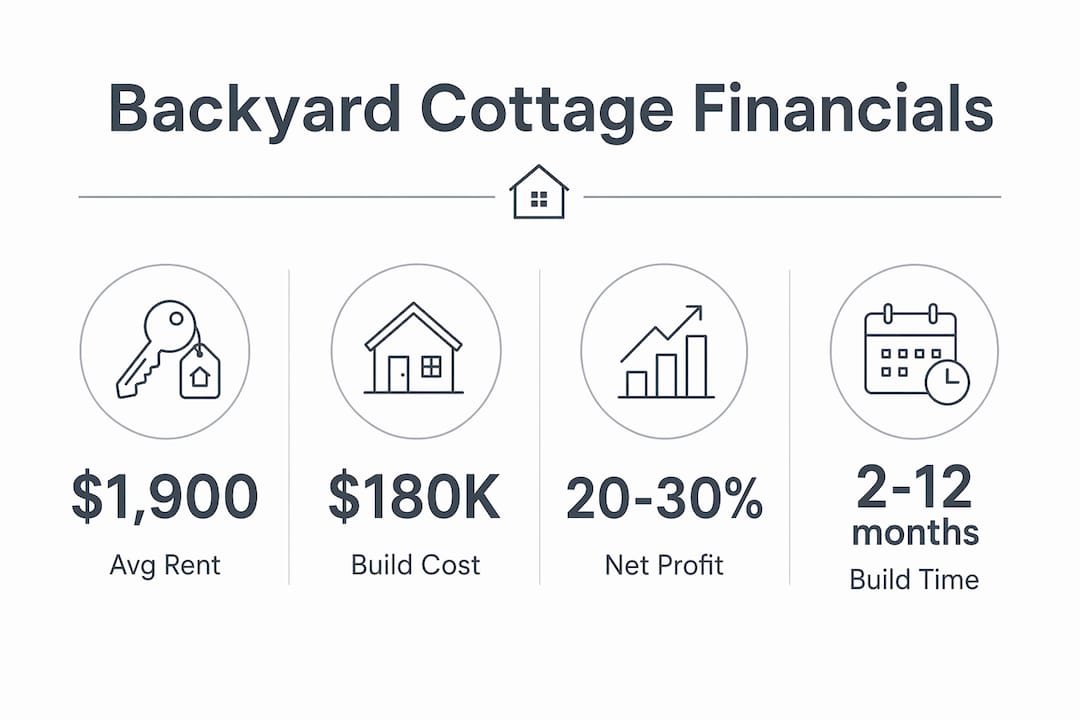
A backyard cottage is defined as a self-contained residential unit built on the same lot as a primary home, and its rental income potential is one of the strongest wealth-building tools available to homeowners today. Known formally as an accessory dwelling unit (ADU), a backyard cottage can generate between $1,800 and $3,500 per month in long-term rent in strong US markets, with short-term rental peaks exceeding $4,000 per month in high-demand metros. Construction costs range from $80,000 for prefab units to over $450,000 for custom detached builds. Property analysts recommend targeting a net profit margin of 20–30% after all expenses to confirm the investment makes financial sense before you break ground.
What is the backyard cottage rental income potential in 2026?
The national average monthly rent for a 600 sq ft ADU is approximately $1,900 per month, but that number shifts dramatically by location. In Los Angeles, rents for similar units run $2,000–$3,500 per month. In San Francisco and Silicon Valley, the range climbs to $2,400–$3,800 per month. That regional variance means your zip code is often the single biggest factor in your income ceiling.
Short-term rental potential adds another layer. In tourist-heavy markets, a well-positioned backyard guesthouse can command nightly rates that push monthly gross income well above long-term lease figures during peak season. The tradeoff is higher management intensity and seasonal income swings. Homeowners who understand both models before committing to one tend to make better financial decisions.
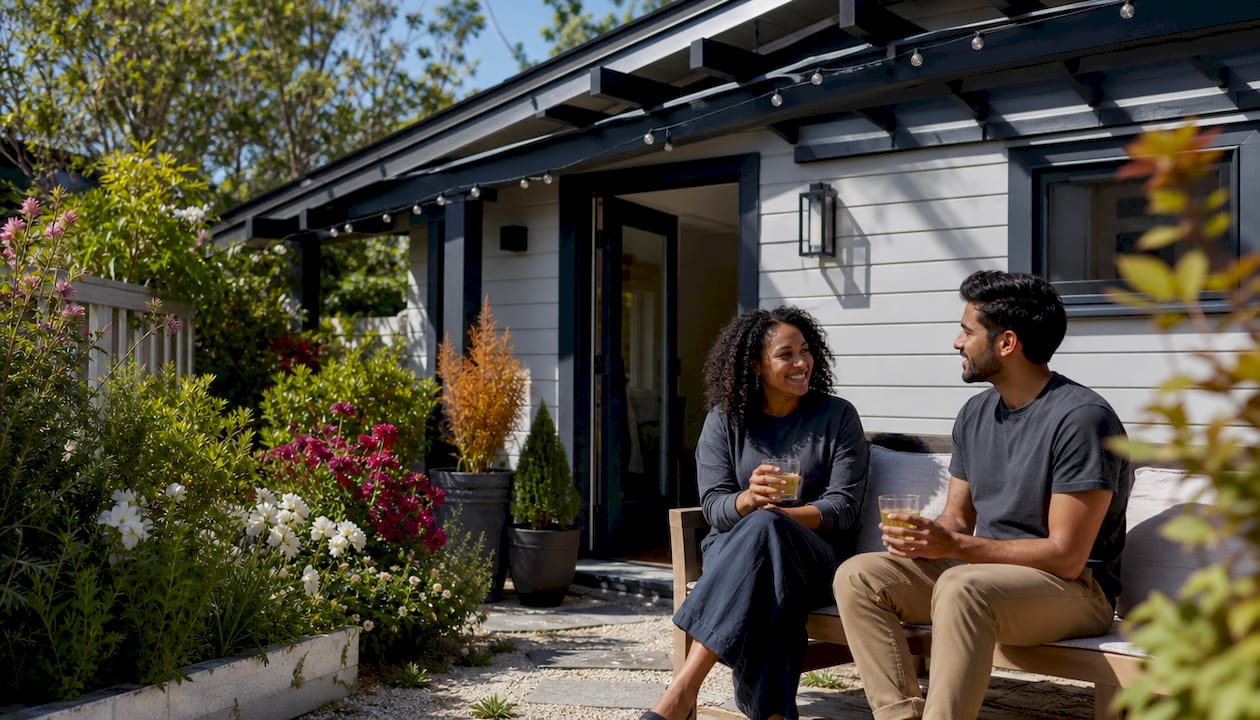
The ADU label matters because it carries legal weight. Zoning laws, permit requirements, and rental regulations all attach to the ADU classification. Knowing the standard term also helps when working with contractors, lenders, and local planning departments.
What do construction costs and timelines look like?
Building a backyard cottage is a construction project first and a rental business second. Detached units cost $180,000–$450,000 to build from scratch, while prefab and modular options run $80,000–$180,000 with timelines of 2–4 months. Custom stick-built units typically take 6–12 months from permit approval to occupancy. Every month of construction is a month without rental income, so timeline directly affects your return on investment.
Garage conversions and basement ADUs offer a middle path. A garage conversion typically costs $50,000–$150,000 and reuses existing structure, which cuts both cost and timeline. The cost per square foot for custom builds runs $150–$400 or more depending on finishes, location, and site conditions. Prefab units land at the lower end of that range and are increasingly popular with homeowners who want predictable pricing.
| Construction type | Estimated cost | Typical timeline |
|---|---|---|
| Prefab/modular ADU | $80,000–$180,000 | 2–4 months |
| Garage conversion | $50,000–$150,000 | 3–6 months |
| Custom detached build | $180,000–$450,000 | 6–12 months |
| Basement ADU | $75,000–$175,000 | 4–8 months |
Understanding the ADU vs. house addition distinction also matters here. A house addition increases your primary home’s square footage but cannot generate independent rental income. An ADU can.
Pro Tip: Budget an additional 10–15% of your construction estimate as a carrying cost reserve. Permit delays, material backorders, and weather stoppages are common. Running out of cash before your unit is rentable is the most avoidable mistake in ADU investment.
How much rental income can homeowners realistically expect?
Rental income from a backyard cottage depends on four variables: size, location, amenities, and rental model. A 400 sq ft studio in a mid-tier market may generate $1,200–$1,600 per month on a long-term lease. A 700 sq ft one-bedroom in a coastal or urban market can reach $2,500–$3,500 per month. Short-term rentals in the same unit can exceed those figures during peak travel periods, but vacancy and platform fees reduce the net.
Amenities drive meaningful rent premiums. Waterfront access and private docks top the list for vacation-style rentals, but urban ADUs benefit from a different set of features. The amenities that consistently lift rental rates and booking volume include:
- Private entrance and outdoor space
- In-unit washer and dryer
- High-speed internet and smart TV
- Air conditioning and quality heating
- Open-concept layout with full kitchen
- Hot tub or dedicated parking
- Pet-friendly policy
Each of these features can justify a rent increase of $100–$300 per month, depending on the market. Stacking several of them compounds the effect. The ADU rental premium from a well-appointed unit versus a bare-bones one can be substantial over a 12-month lease.
| Market | Long-term rent (600 sq ft) | Peak STR monthly gross |
|---|---|---|
| National average | ~$1,900 | $2,500–$3,500 |
| Los Angeles | $2,000–$3,500 | $3,500–$5,000 |
| San Francisco/Silicon Valley | $2,400–$3,800 | $4,000–$6,000 |
| Mid-tier US city | $1,200–$1,800 | $1,800–$2,800 |
What strategies maximize rental profitability and occupancy?
Dynamic pricing and minimum stay requirements are the two most effective tools for improving short-term rental income. Dynamic pricing adjusts your nightly rate based on local demand, events, and seasonality. A flat rate leaves money on the table during peak weekends and makes you uncompetitive during slow periods. Minimum stay requirements of two or three nights reduce turnover costs and cleaning fees without significantly hurting occupancy.
Balancing short-term and long-term rentals is a strategy more homeowners should consider. A hybrid model, where you rent short-term during peak tourist months and switch to a month-to-month lease in the off-season, smooths cash flow and reduces vacancy risk. This approach works especially well in markets with defined tourist seasons.
The following strategies consistently improve net returns for backyard rental property owners:
- Set dynamic nightly rates tied to local event calendars and seasonal demand.
- Require a two-night minimum stay to cut cleaning and turnover costs.
- Offer a monthly discount of 15–20% to attract medium-term renters during slow seasons.
- Track every expense in a dedicated ledger from day one, including minor repairs.
- Review your rent against comparable listings every 90 days and adjust accordingly.
- Respond to guest inquiries within one hour to improve booking conversion rates.
- Build a five-star review base early. Reviews compound. A unit with 50 strong reviews books faster and at higher rates than a newer listing.
Expense tracking and tax treatment are non-negotiable parts of running a passive income ADU as a real business. Depreciation, repairs, and operating costs are generally deductible against rental income, but only if you keep clean records.
Pro Tip: Install a smart thermostat in your cottage. Smart thermostats allow you to control heating and cooling remotely and prevent guests from running the system at extreme settings. The utility savings add up quickly across a full rental year.
What operational and financial challenges should landlords prepare for?
High gross rental income does not guarantee positive cash flow. Management fees, maintenance, vacancy, insurance, and cleaning costs can total 60–80% of gross income. Net income often lands at 20–40% of gross. Homeowners who underwrite based on gross figures rather than net figures frequently discover their cottage generates far less than expected.
Treating a backyard ADU as a micro-business rather than passive income is the mindset shift that separates profitable landlords from frustrated ones. That means a dedicated bank account, monthly profit and loss tracking, and a maintenance reserve fund. If mortgage payments plus utilities exceed 40% of your gross rental income, the risk of negative cash flow rises sharply.
Common operational challenges and how to address them:
- Vacancy gaps: Set a minimum occupancy target and adjust pricing before gaps appear, not after.
- Maintenance surprises: Fund a reserve of 1–2% of the unit’s value annually for repairs and replacements.
- Insurance gaps: Standard homeowner policies rarely cover short-term rental activity. Get a landlord or short-term rental policy.
- Regulatory changes: Local ADU rules shift frequently. Monitor local ADU policy reforms and stay current on permit and licensing requirements.
- Underestimating carrying costs: Factor in mortgage interest, property taxes, and insurance from the day construction begins, not from the day the first tenant moves in.
- Overestimating achievable rent: Listed rent and achievable rent are not the same number. Use closed comparable transactions, not active listings, to set your income projections.
Property analysts recommend conservative underwriting as the single most important discipline in ADU investment. Build your financial model on 75% occupancy and 85% of your target rent. If the numbers still work, you have a viable project.
Key Takeaways
A backyard cottage generates meaningful rental income only when construction costs, operating expenses, and realistic rent projections are aligned from the start.
| Point | Details |
|---|---|
| Know your net, not just gross | Operating costs consume 60–80% of gross income; target a 20–30% net profit margin. |
| Construction choice drives ROI | Prefab units cost $80,000–$180,000 and deliver faster returns than custom builds. |
| Location sets the income ceiling | ADU rents range from $1,200 in mid-tier markets to $3,800 in San Francisco. |
| Amenities lift rent meaningfully | Features like in-unit laundry, private entry, and parking can add $100–$300 per month. |
| Treat it as a business | Track every expense, maintain a repair reserve, and review rent every 90 days. |
What I’ve learned from watching homeowners get this wrong
Most homeowners who struggle with backyard cottage rentals made the same mistake: they built the unit first and figured out the business model later. I’ve seen beautifully constructed ADUs sit underperforming because the owner priced based on hope rather than comparable data, or because they didn’t account for the two months of vacancy between tenants.
The owners who do well treat their cottage like a micro-hotel from day one. They know their break-even occupancy rate. They have a cleaning crew on speed dial. They respond to inquiries fast and protect their review score like it’s a credit score. Because in the short-term rental world, it basically is.
Conservative underwriting is not pessimism. It’s the filter that separates viable projects from expensive lessons. If your numbers only work at 95% occupancy and full asking rent, your numbers don’t work. Build in a buffer and you’ll sleep better and profit more consistently.
Scaling beyond one unit is where the real leverage appears. Homeowners who build one ADU, stabilize it, and then use the equity and income to fund a second unit are building a genuine real estate portfolio. The first unit is always the hardest. The second one benefits from everything you learned.
Guest experience is the compounding asset that most landlords undervalue. A five-star review from a happy guest is worth more than any marketing spend. Invest in the small details: a welcome basket, clear instructions, a fast response to any issue. Those details show up in your reviews, and your reviews show up in your bookings.
— Rudy
How Live Large™ helps homeowners build and profit from backyard cottages
Live Large™ works with homeowners at every stage of the ADU process, from initial site evaluation and financing to construction, installation, and rental readiness. Whether you are weighing a prefab unit against a custom build or trying to understand how local zoning affects your options, Live Large™ brings the expertise to move your project forward with confidence.
Live Large™ also tracks ADU policy developments across key markets, so homeowners stay ahead of regulatory changes that affect rental viability. If you are ready to put your backyard to work, explore the backyard ADU income options that Live Large™ offers and get a clear picture of what your property can realistically generate in 2026.
FAQ
What is a backyard cottage called in real estate?
A backyard cottage is formally called an accessory dwelling unit (ADU). The term covers detached units, garage conversions, basement apartments, and attached additions that function as independent residences.
How much can a backyard cottage earn per month?
A 600 sq ft ADU earns a national average of approximately $1,900 per month on a long-term lease, with short-term rental peaks exceeding $4,000 per month in high-demand markets like Los Angeles and San Francisco.
What is a realistic net profit margin for a rental cottage?
Property analysts recommend targeting a net profit margin of 20–30% after all expenses. If mortgage payments plus utilities exceed 40% of gross rental income, the risk of negative cash flow rises significantly.
How long does it take to build a backyard cottage?
Prefab and modular ADUs take 2–4 months to complete. Custom detached builds typically require 6–12 months from permit approval to occupancy. Garage conversions fall in the middle at 3–6 months.
Do amenities really affect how much rent a cottage commands?
Amenities like private entry, in-unit laundry, high-speed internet, and parking each add $100–$300 per month to achievable rent. Waterfront access and hot tubs drive the largest premiums for vacation-style short-term rentals.