
Amenities in accessory dwelling units are the primary driver of rental premium, directly determining how much rent you can charge and how much your property appraises for. The industry term for this effect is “amenity-driven value uplift,” and it applies to both monthly income and long-term equity. Homes with legal ADUs appraise 20–30% higher than comparable homes without one. That gap widens further when the ADU includes high-quality finishes, privacy features, and modern technology. Understanding the role of amenities in ADU rental premium is not optional for investors who want to maximize returns. It is the foundation of every smart ADU investment decision.
Which amenities most effectively increase ADU rental premiums?
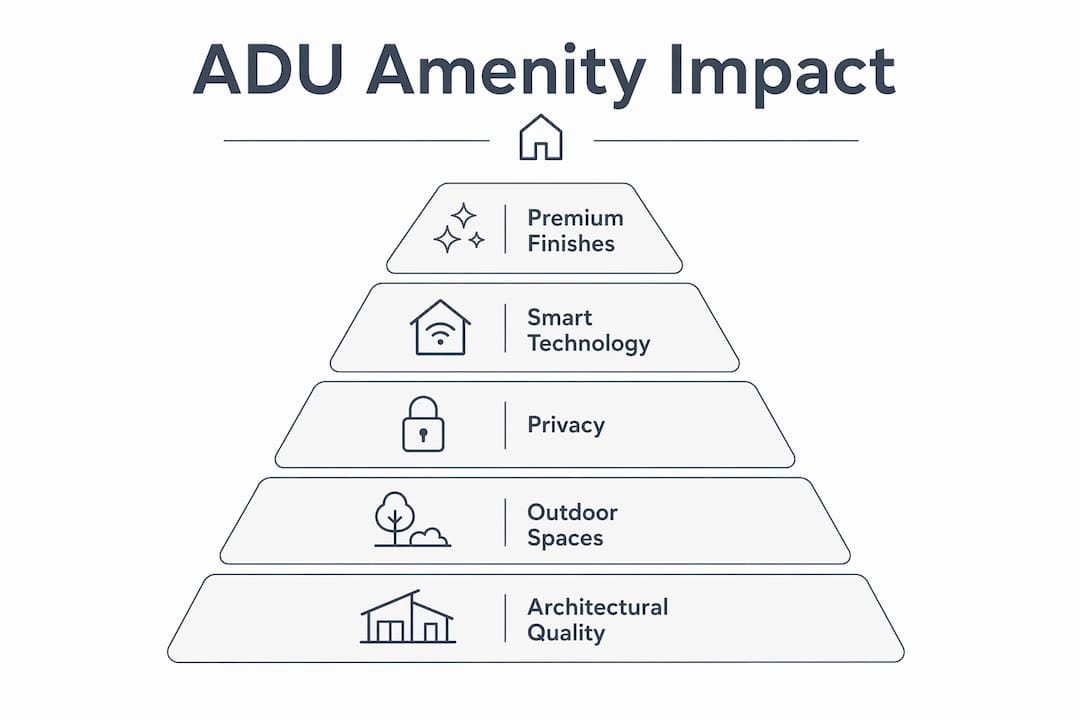
The amenities that move rent the most fall into four clear categories: interior finishes, technology, privacy, and outdoor features. Each category carries a different cost-to-return ratio, and knowing which to prioritize saves you money while maximizing income.
Interior finishes and architectural quality
High-end interior finishes are the most visible signal of quality to prospective tenants. Vaulted ceilings, spa-like bathrooms, and premium cabinetry command measurably higher rents than standard builder-grade finishes. A well-designed ADU with premium materials reads as an independent rental home rather than a converted garage. That perception directly attracts better tenants and supports higher asking prices.
Technology and connectivity
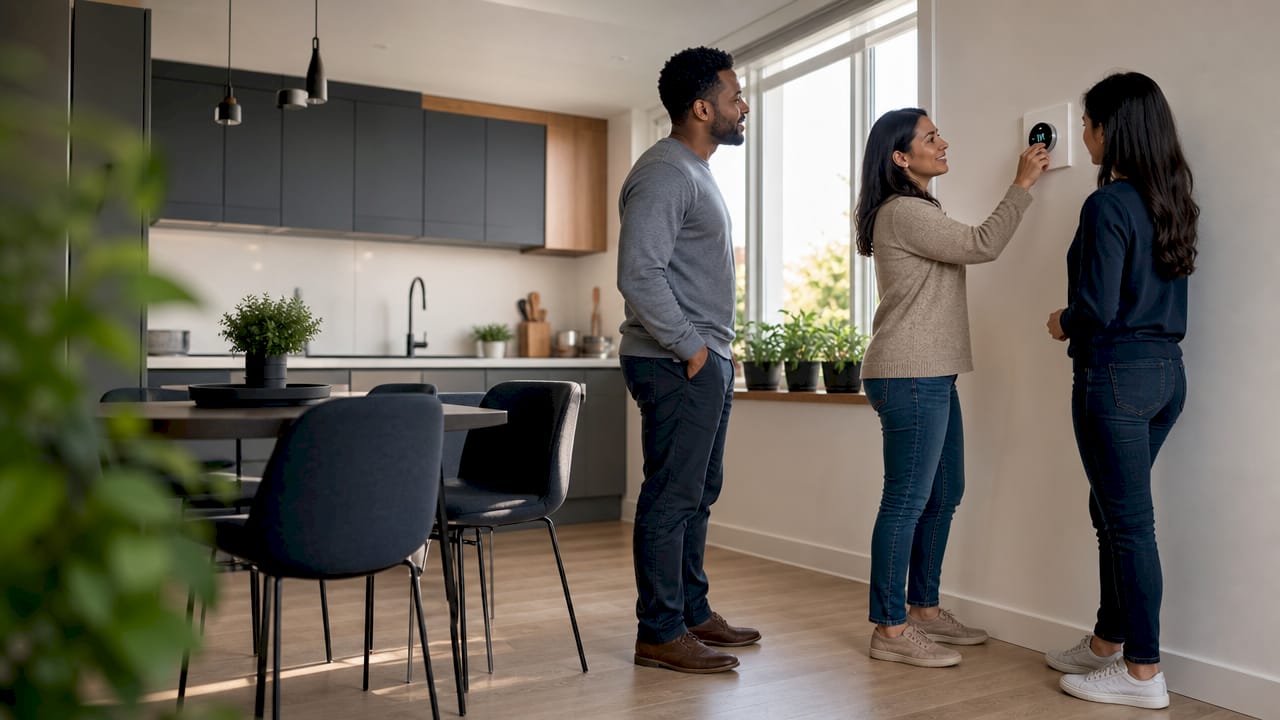
Smart home features and premium finishes increase tenant appeal and justify higher pricing in competitive markets. Renters in urban and high-demand areas place real value on convenience and efficiency. Including high-speed internet as part of the rent, smart thermostats, keyless entry, and app-controlled lighting costs relatively little to install but signals a premium product. These features also reduce tenant turnover because renters are reluctant to leave a unit that already has everything set up.
Privacy and detached design
Privacy is a deciding factor for tenants willing to pay more. Landscaping and privacy features are often the amenities that push a detached ADU into a higher rent tier. Soundproofing between the main home and the ADU, separate entrances, and mature hedging or fencing all contribute to a sense of independence. Tenants paying premium rents expect to feel like they live in their own home, not an add-on.
Outdoor amenities
Balconies, patios, and pet-friendly outdoor spaces add square footage that does not count toward the unit’s official size but adds real perceived value. These features are especially effective in markets with mild climates, where outdoor living extends the functional space of a small unit. A 500-square-foot ADU with a private patio feels significantly larger than its floor plan suggests.
- Vaulted ceilings and open layouts increase perceived space without adding square footage
- Spa-quality bathrooms with walk-in showers and quality tile are among the highest-ROI upgrades
- Smart home technology (thermostats, locks, lighting) adds convenience at low installation cost
- Separate private entrances and soundproofing justify detached-unit pricing
- Private patios or balconies extend livable space and support premium positioning
- Pet-friendly features (fenced yards, durable flooring) expand the eligible tenant pool
Pro Tip: Prioritize privacy and kitchen quality first. Tenants paying $2,500 or more per month will walk away from a unit that feels overlooked or has a cramped, dated kitchen before they notice the smart thermostat.
How does treating your ADU as a rental business change your returns?
Framing an ADU as a standalone rental business rather than a home improvement project drives more disciplined pricing, rational design choices, and tax-efficient management. This mindset shift changes every decision, from which amenities you install to how you document expenses.
The financial case is concrete. ADU rental income ranges from $1,200 to $3,000+ monthly depending on location and unit size, with consistent income contributing to ROI over 20% in the first five years. That return depends heavily on how well you manage the business side.
Here is how the business framing approach works in practice:
- Set market-rate rent from day one. Research comparable rentals in your area before listing. Underpricing a premium ADU is the most common mistake investors make, and it is hard to correct mid-tenancy.
- Open a dedicated bank account for ADU income and expenses. Mixing ADU finances with personal accounts makes tax filing harder and increases the chance of missing deductions.
- Track every deductible expense. Repairs, utilities, property management fees, and insurance all reduce your taxable rental income. Many homeowners miss $3,000 to $8,000 in annual deductions due to poor bookkeeping.
- Claim depreciation. The building portion of your ADU depreciates over 27.5 years. On a $320,000 build, annual depreciation runs approximately $11,600, which can effectively eliminate taxable rental income for several years.
- Review rent annually. Market rents shift. A premium ADU with strong amenities should keep pace with or outperform the local market.
Pro Tip: Hire a CPA who specializes in rental property for your first tax year. The cost is typically $300–$600 and the deductions they identify almost always pay for it many times over.
The business framing approach also affects which amenities you choose. When you treat the ADU as a product, you evaluate every upgrade by its impact on rent and occupancy rather than personal taste. That discipline produces better financial outcomes.
How do luxury amenities in ADUs differ from standard offerings?
In luxury rental ADUs, the architecture and high-end finishes themselves serve as the principal amenity driving rental premiums and appraisal uplift. This is a meaningful distinction from standard ADUs, where amenities are additions to a basic unit. In a luxury ADU, the building itself is the amenity.
High-quality finishes and architectural detail impact both rental premiums and appraisal value significantly. A well-built luxury ADU attracts high-net-worth tenants who expect the unit to match the quality of the main estate. These tenants stay longer, pay on time, and treat the property with care.
| Feature category | Standard ADU | Luxury ADU |
|---|---|---|
| Ceiling height | Standard 8 ft | Vaulted or 10+ ft ceilings |
| Bathroom | Basic fixtures, tub/shower combo | Spa-style, walk-in shower, premium tile |
| Kitchen | Builder-grade cabinets and appliances | Custom cabinetry, high-end appliances |
| Outdoor space | Shared or minimal | Private patio, high-privacy landscaping |
| Technology | Basic wiring | Full smart home integration |
| Rental positioning | Entry-level to mid-market | Premium to luxury tier |
Markets like Southern California, Silicon Valley, and other high-demand coastal areas show the strongest correlation between luxury ADU amenities and rental premiums. In these markets, a luxury ADU can rent for two to three times the rate of a comparable standard unit. The appraisal impact follows the same pattern. Investors in these markets who build to luxury standards consistently see stronger returns on both income and equity.
The key principle is that luxury ADUs must reflect the quality and character of the main estate. A luxury ADU attached to a modest home creates a mismatch that tenants and appraisers both notice. The most effective luxury ADU investments align the unit’s quality with the surrounding property and neighborhood.
What practical steps maximize ADU rental premiums through amenities?
Maximizing your ADU rental premium requires deliberate choices at every stage, from design through ongoing management. The multifamily ADU development approach used by experienced investors applies equally to single-unit ADUs: treat amenity selection as a product decision, not a personal preference.
- Profile your target tenant before you design. A unit targeting remote workers needs fast, reliable internet and a dedicated workspace. A unit targeting young professionals in a walkable neighborhood benefits more from outdoor space and smart home features.
- Document every expense from the first day of construction. This creates a complete record for depreciation, deductions, and future appraisals.
- Price your rent based on amenities, not just square footage. A 600-square-foot ADU with a private patio, spa bathroom, and smart home features commands a different price than a 600-square-foot standard unit.
- Build in flexibility. Adaptable layouts and multifunctional amenities increase occupancy rates and allow premium pricing as tenant needs change over time.
- Work with builders who specialize in premium ADUs. General contractors often underestimate the finish quality and detail required to justify premium rents. Specialists understand what tenants in the premium tier expect.
- Maintain the unit proactively. Premium tenants expect premium maintenance. A fast response to repairs protects your rent level and reduces turnover.
Pro Tip: Walk competing rentals in your area before setting your rent. Seeing what $2,000 and $2,500 per month looks like locally tells you exactly which amenity upgrades will move your unit into the higher tier.
Key Takeaways
Amenities are the single most controllable variable in ADU rental premium, and selecting them with discipline produces measurably higher income and property value.
| Point | Details |
|---|---|
| Amenities drive appraisal value | ADUs with premium finishes appraise 20–30% higher than comparable homes without one. |
| Business framing improves returns | Treating your ADU as a rental business leads to disciplined pricing and better tax management. |
| Luxury finishes justify premium rents | Vaulted ceilings, spa bathrooms, and smart home tech attract high-net-worth tenants willing to pay more. |
| Privacy features close the deal | Landscaping, soundproofing, and separate entrances are often the deciding factors for premium-tier tenants. |
| Documentation protects income | Missing deductions costs homeowners $3,000–$8,000 annually. Proper bookkeeping captures that value. |
Why most ADU investors leave money on the table
Most homeowners I work with make the same mistake. They build a solid ADU, price it at whatever feels reasonable, and then wonder why their returns are mediocre. The problem is almost never the unit itself. It is the absence of a deliberate amenity strategy.
The investors who consistently earn top-tier rents treat every design decision as a business decision. They ask: “Will this upgrade increase my rent by more than its annual cost?” A $4,000 spa bathroom upgrade that adds $200 per month to rent pays for itself in less than two years and then generates pure return. A $15,000 landscaping project that adds $300 per month takes four years to recover. Both are worth doing. But you need to run the numbers.
The other pattern I see constantly is homeowners who build a genuinely premium ADU and then underprice it out of uncertainty. They are not sure the market will support $2,800 per month, so they list at $2,200. That $600 monthly gap costs them $7,200 per year. Walk the comparable rentals in your area. If your unit is better, price it like it is better.
The business framing insight matters more than any single amenity. When you treat the ADU as a product with a target customer, a price point, and a financial model, every decision gets clearer. You stop asking “What do I like?” and start asking “What does my target tenant pay more for?” That shift alone is worth more than any individual upgrade.
— Rudy
Live Large™ helps you build ADUs that earn more
Selecting the right amenities is only half the equation. The other half is building in a market where policy supports your investment and a team that understands premium ADU construction.
Live Large™ specializes in the purchase, financing, development, construction, and installation of accessory dwelling units designed to maximize rental income. Recent Tampa ADU policy reforms have opened new opportunities for homeowners and investors to build premium units with strong rental potential. Whether you are planning a backyard ADU or evaluating a larger investment, the Live Large™ team brings the design expertise and market knowledge to help you build a unit that commands top-tier rents from day one. Visit Live Large™ to see how we approach ADU design for maximum rental return.
FAQ
What is the role of amenities in ADU rental premium?
Amenities directly determine how much rent an ADU can command and how much it adds to property appraisal value. Premium features like spa bathrooms, smart home technology, and private outdoor spaces position a unit in a higher rent tier.
How much more can a luxury ADU rent for compared to a standard unit?
Rental income for ADUs ranges from $1,200 to $3,000+ monthly depending on location and amenity level. In high-demand markets like Southern California and Silicon Valley, luxury ADUs can rent for two to three times the rate of standard units.
Which ADU amenities offer the best return on investment?
Spa-quality bathrooms, private outdoor spaces, and smart home technology consistently deliver strong ROI because they directly justify higher rents and attract tenants who stay longer and pay reliably.
How do tax deductions affect ADU rental income?
Depreciation on a $320,000 ADU build generates approximately $11,600 in annual deductions, which can eliminate taxable rental income for several years. Many homeowners also miss $3,000–$8,000 in annual deductible expenses due to poor recordkeeping.
Does an ADU increase overall property value?
Homes with legal ADUs appraise 20–30% higher than comparable homes without one, with the premium increasing further in strong housing markets where rental demand is high.